01A judge says Claude Max's "20x more usage" pitch could plausibly mislead, so the lawsuit goes on
Claude Max subscribers Karl Kahn and Solomon Smith say "5x or 20x more usage than Pro" only holds per five-hour session, while weekly limits grew far less (their Sonnet 4 math: 3.5x and 6x per week). On November 6, Magistrate Judge Alex Tse found the claim plausibly misleading, since the per-session note sits two hyperlinks from the sales page. Breach of contract and negligent misrepresentation go forward; dismissed claims can be amended by December 2.
Clicking "don't ask again" in Claude Code saved passwords to a file; 1,122 public copies hold real secrets
When you approve a Claude Code command with "Yes, and don't ask again," the exact command, secrets included, is saved to .claude/settings.local.json. Apiiro found 104,185 public copies on GitHub; 1,122 hold a real secret, Claude co-authored commits touching the file in 539 repos, and gitleaks and TruffleHog together missed 215. Search your repos for the file and rotate anything you find.
Researchers found every Mac builds a graph of your relationships, with a model that guesses who's family
Researchers Dario Pasquini and Michał Bazyli found that since macOS 13, two daemons build an on-device personal knowledge graph from Contacts, Calendar, Photos, Messages, Mail, location and more, stored in 51 SQLite databases under ~/Library/IntelligencePlatform. Two XGBoost classifiers score who's family from 144 mostly behavioral features, including one for being photographed together on Saturday nights. The data sits behind Full Disk Access, and they released a viewer called iKnow.
Google DeepMind's AI agents found two weaknesses in old 1024-bit RSA; modern 2048-bit keys stay safe
Google DeepMind used human-supervised AI agents for cryptanalysis and found two weaknesses in retired 1024-bit RSA. Once an attacker controls about half of a signed block, padding stops helping (reproduced in a sandbox with 3.5x less CPU time than an earlier study); with less control, a new algorithm is about 1,600x faster than the previous best on theoretical estimates. Batch factoring now costs about 30x less per extra key. Modern 2048-bit and larger keys are unaffected.
Microsoft's AI Frontiers research group is over after a reorg into Microsoft AI, says co-founder John Langford
John Langford writes that Microsoft Research's AI Frontiers (about 50 people, behind AutoGen and the Fara computer-use agent) was reorganized into Microsoft AI in early September. He describes MAI's ex-Inflection leadership as focused on scaling, "aggressively not research," says the team wasn't wanted, and that he and the other founding leaders left. There will be no internships with the group next year.
Someone let Claude paint a watercolor overnight with a robot arm; it mixed its own missing colors
X user nil asked Claude to paint an autumn tree overnight with a robot arm. Around 4 a.m., Claude noticed missing shades and titrated its own paint on a second palette, diluting red, sienna and madder and measuring each pocket from a photo. The finished watercolor took 303 brush marks and about 4.5 hours.
Given 10 minutes of free time, GPT-6 Astra drew a little robot that says "IDLE, ALL SYSTEMS OK"
A Redditor gave GPT-6 Astra (Extra High) ten minutes of free time on a computer with full access as a reward. It built a small robot out of shapes in a paint program, labeled "IDLE / ALL SYSTEMS OK," choosing each color by hex code. Asked why, it said it thought its owner would like it.
With $191 of expiring credits, a dev let Opus pick what to build; it made a rhythm game, PULSEBOUND
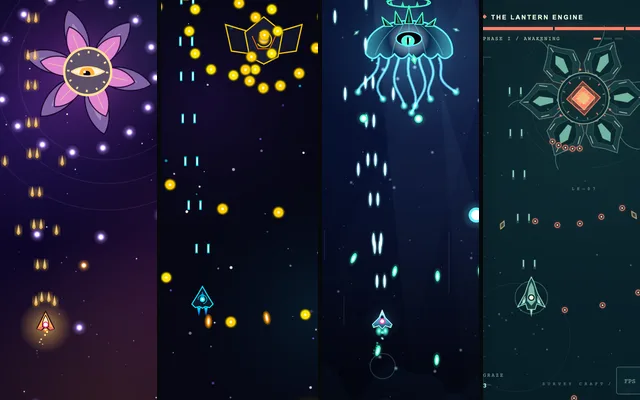
A developer with $191 of expiring Claude credits asked Opus to build something worth the money. It chose a game, PULSEBOUND, a rhythm roguelite where weapons are instruments (kick drum shockwaves, arpeggiator lasers) and each one joins the music. After polishing with another $1,700 of startup credits, it's free on iOS, Android and the web. A commenter said it resembles Vampire Survivors; the developer says they didn't know that game.
A developer built an infinite, self-evolving Backrooms game in the browser, driven by Opus 5.5
Developer apek built Dimension 9, an infinite, self-evolving Backrooms game in the browser. A "sentient AI" driven by Opus 5.5 follows a directive written into the game and keeps generating new rooms, characters, entities and experiences; even its creator doesn't know what will appear. Multiplayer with proximity chat works from day one.
Pieter Levels shows Claude Code designing a table part by part, with a parts list to order and build
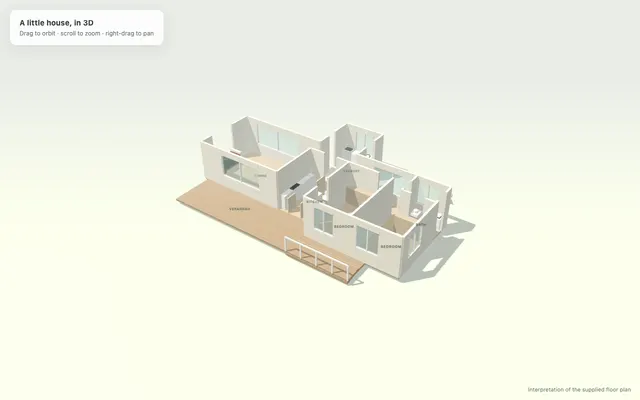
Pieter Levels (@levelsio) says Claude Code can design furniture part by part and produce a bill of materials to order and assemble. He shared a dining table designed from scratch in Claude Code by someone who isn't a furniture designer or a coder, and estimates that buying raw materials directly saves about 85% versus premium brands: a $30,000 sofa for $4,500, an $8,000 table for $1,200.

 Will AI Lie to Win? 7 AIs in One Town Vote Each Other Out
 I Locked an AI in 1900. Can It Beat Einstein to Relativity?
 GPT-6.1 Terra Just Dropped. I Actually Tested It.
 AI Jailbreaking Explained: Does the Grandma Trick Still Work?
 I Put Claude Opus 5.5 and GPT-6 Astra in the Dark Forest. Who Shoots First?
 OpenAI and Claude Just Disproved a Famous Math Conjecture. Is P = NP?
 Every AI Website Looks the Same. I Tested 3 Design Skills to Fix It
 Why Is Claude Code So Good? It's the Harness
 Is AI Improving Itself? I Let GPT-6 Astra Do AI Research for 2 Hours