01A startup says an unreleased Anthropic model proved a quantum conjecture open since 2008
Physical Superintelligence (PSI) says its internal research system, running instances of a non-public Anthropic model, proved the Aaronson-Ambainis conjecture (open since 2008): on yes-or-no questions about random inputs, a classical computer can imitate a quantum one with only polynomially more queries. The system had a complete proof on day three and Lean accepted it. Stanford researchers who proved a special case in August called it "a huge result"; the paper has not been peer reviewed, and PSI did not name the model.
Anthropic shares how Claude's memory works, including "dreaming" to fix its own notes
Anthropic's engineering post on agent memory: Claude writes notes to a memory folder, and in "dreaming" it rereads past transcripts to correct, merge and reorganize those notes. In Pokémon Red, a wrong note about Mt. Moon sent Claude off the same ledge three times; after dreaming corrected it, Claude reached Cerulean City. At about 10,000 steps, Sonnet 3.7 had 413 memory files and one badge, Fable 5 nine files plus global.md and four badges.
OpenAI raises $11B at $1.25T, below its target; investors push Anthropic's IPO price down
OpenAI closed about $11 billion, the first part of a round valuing it at $1.25 trillion (Bloomberg, Reuters), below the up-to-$30 billion and roughly $1.5 trillion it first sought. Anthropic's IPO, planned for the week before Thanksgiving with up to $100 billion raised, has been discussed at about $1.5 trillion, down from about $2 trillion; after Thursday's selloff, three investors told the WSJ the price likely has to fall, one saying closer to $1 trillion.
A Redditor built a sailing sim with Claude Code; Gemini 4 Argon won the AI race
A Redditor had Claude Code build a sailing simulator (boat physics, wind, 3D water and coast) and raced Opus, GPT-6 Astra, Gemini 4 Argon and Qwen 3.5 9B in it: every 5 seconds each model gets 23 raw numbers and sets helm and sails, with the sim paused while it thinks. Gemini Argon won at $0.78 a run versus $3.58 for Astra; commenters cheered Qwen heading for the beach.
Google's Gemini Omni 1.2 Flash makes 15-second videos, 30% cheaper, with chat editing
Gemini Omni 1.2 Flash generates 3- to 15-second videos (up from 10 seconds), costs 30% less than 1.1 at $0.07 a second for 720p, and lets you edit the same clip over several chat turns (background, weather, aspect ratio). Faces, clothes and packaging text hold across camera angles, and multi-speaker lip-sync improved. It's out in the Gemini API, Google Vids and Gemini for business.
Grimes has a free cameo in Gods Don't Give Gifts, the first AI feature film headed to theaters
Gods Don't Give Gifts, an R-rated sci-fi feature from the AI studio Fable directed by Zack London (Gossip Goblin), opens in theaters December 4 as the first AI feature to do so. Grimes licensed her likeness for free and voiced Zaynith Alda, a masked aristocrat she helped design, in a cameo of a few minutes. The studio ran a Times Square campaign and held screenings for Academy animation voters.
A solo dev built a cartoon FPS with a team of AI agents; the free demo is on Steam
A solo developer built Iron Curtain Call, a cartoon FPS set in 1965 where World War III is run by a customer service AI, with Godot, Claude Code and ElevenLabs: first commit September 29, Steam demo October 23, 4,558 commits, and 274,688 lines of AI-written GDScript by November 1, with agents in separate branches merged only when tests pass. Levels, feel and design are the developer's; the full game is due March 11, 2027.
Claude estimated 50 days; six Claude Code subagents finished in 35 hours
A Redditor says Claude estimated 50 days for a SaaS roadmap, and six parallel Claude Code subagents (tests first, a reviewer on risky tasks) finished 106 tasks across 7 repos in 35 hours. Effective parallelism was about 1.8 agents; risky tasks such as billing and auth took 2.7 times longer and held the real bugs; 55 leftover test databases filled the disk; the slowest part was human review and decisions.
CBC: AI scraping bots are knocking university library collections offline
CBC News reports academic libraries are fighting swarms of AI data-scraping bots that slow or crash catalogues and digital collections. UNC Chapel Hill once logged over 11,000 searches for Finnish music in a day from thousands of IP addresses; many scrapers ignore robots.txt, and IP blocking no longer works. Project Gutenberg offers its whole library as one download, "but the bots are too stupid to use it."
A developer runs all 124M parameters of GPT-2 in pure CSS, weights stored in fonts
Shubham Patil's GPT-2 in CSS runs all 124M parameters of GPT-2 small with no JavaScript: the weights live in about 240 MB of fonts and the browser's layout and font-shaping engines do the matrix math. After about 450 experiments since August, it went from 40 to about 16 seconds a token, so 32 tokens take around 15 minutes on desktop Chrome or Edge with 16 GB of RAM.

 Can AI Translate Manga? I Tested GPT on a Whole SPY×FAMILY Chapter
 I Locked an AI in 1900. Can It Beat Einstein to Relativity?
 GPT-6.1 Terra Just Dropped. I Actually Tested It.
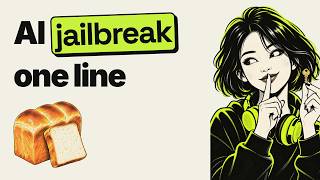 AI Jailbreaking Explained: Does the Grandma Trick Still Work?
 I Put Claude Opus 5.5 and GPT-6 Astra in the Dark Forest. Who Shoots First?
 Why Is Claude Code So Good? It's the Harness
 OpenAI and Claude Just Disproved a Famous Math Conjecture. Is P = NP?
 Every AI Website Looks the Same. I Tested 3 Design Skills to Fix It
 Is AI Improving Itself? I Let GPT-6 Astra Do AI Research for 2 Hours