Chapter one
Reads left to right. Tap the right half for the next page, the left half to go back; arrow keys work on a computer.
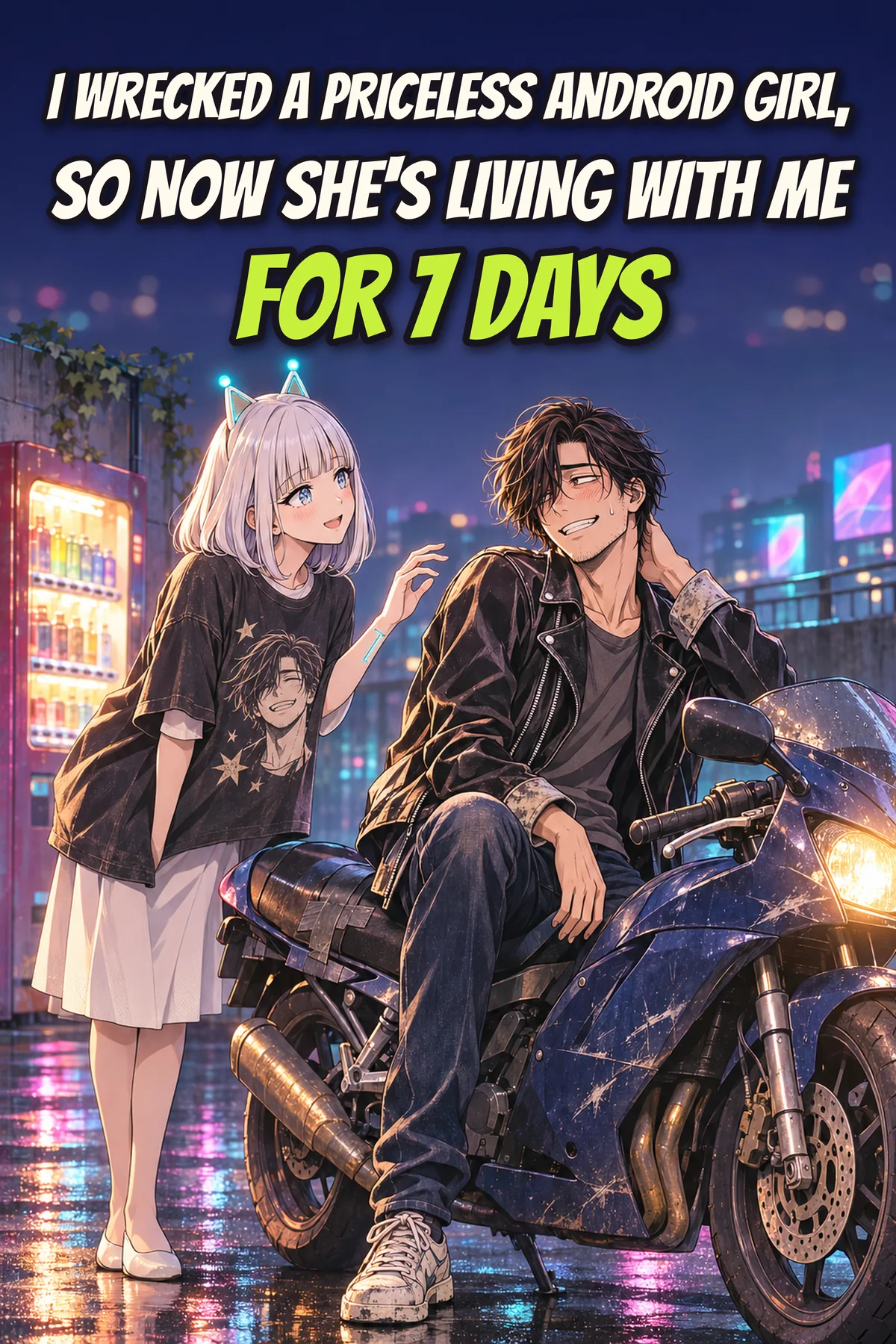
Art: GPT Image 2 (built into Codex) · Story and storyboard: Claude Opus 4.6 · Lettering: code
Character and location sheets
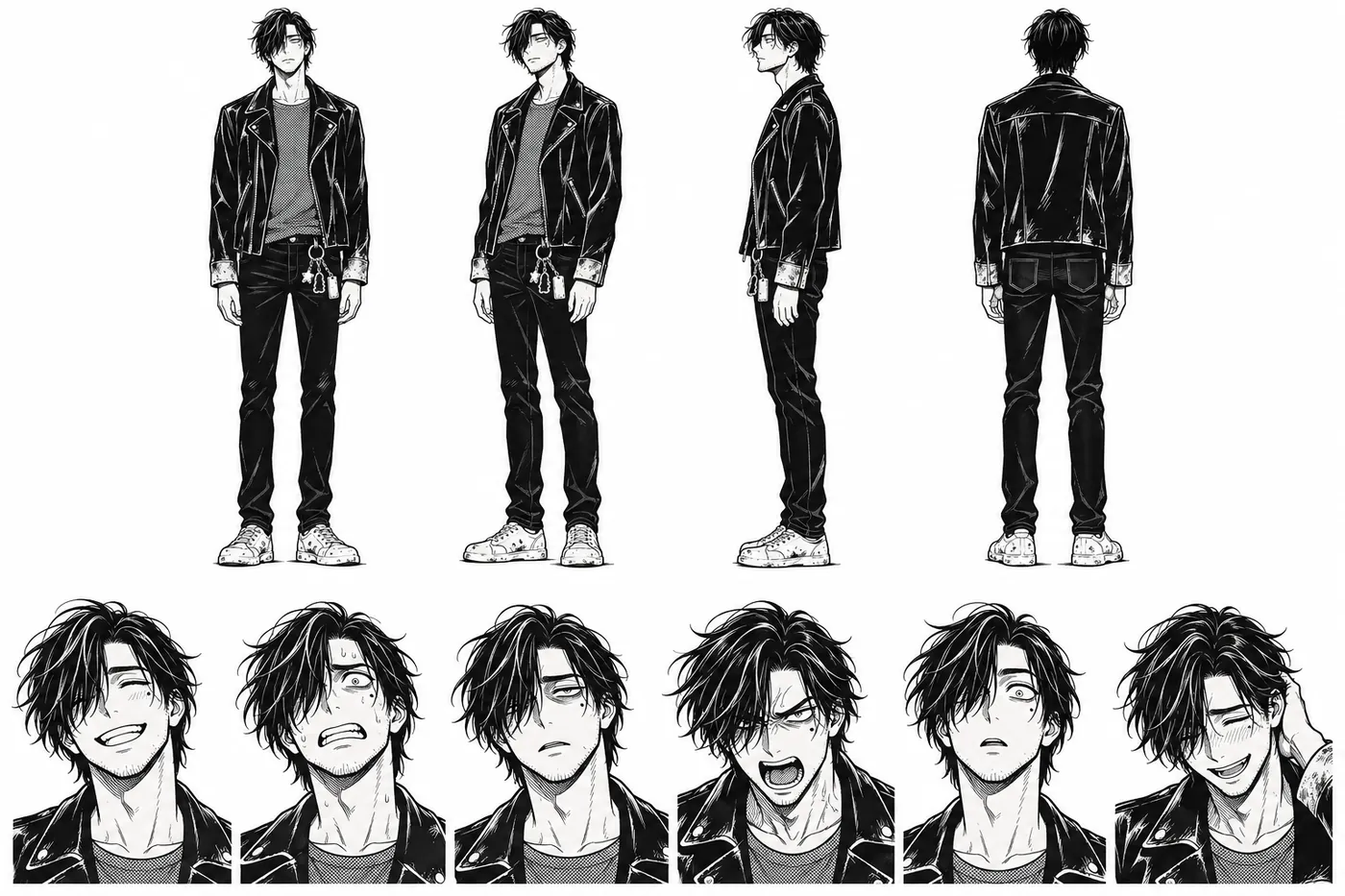
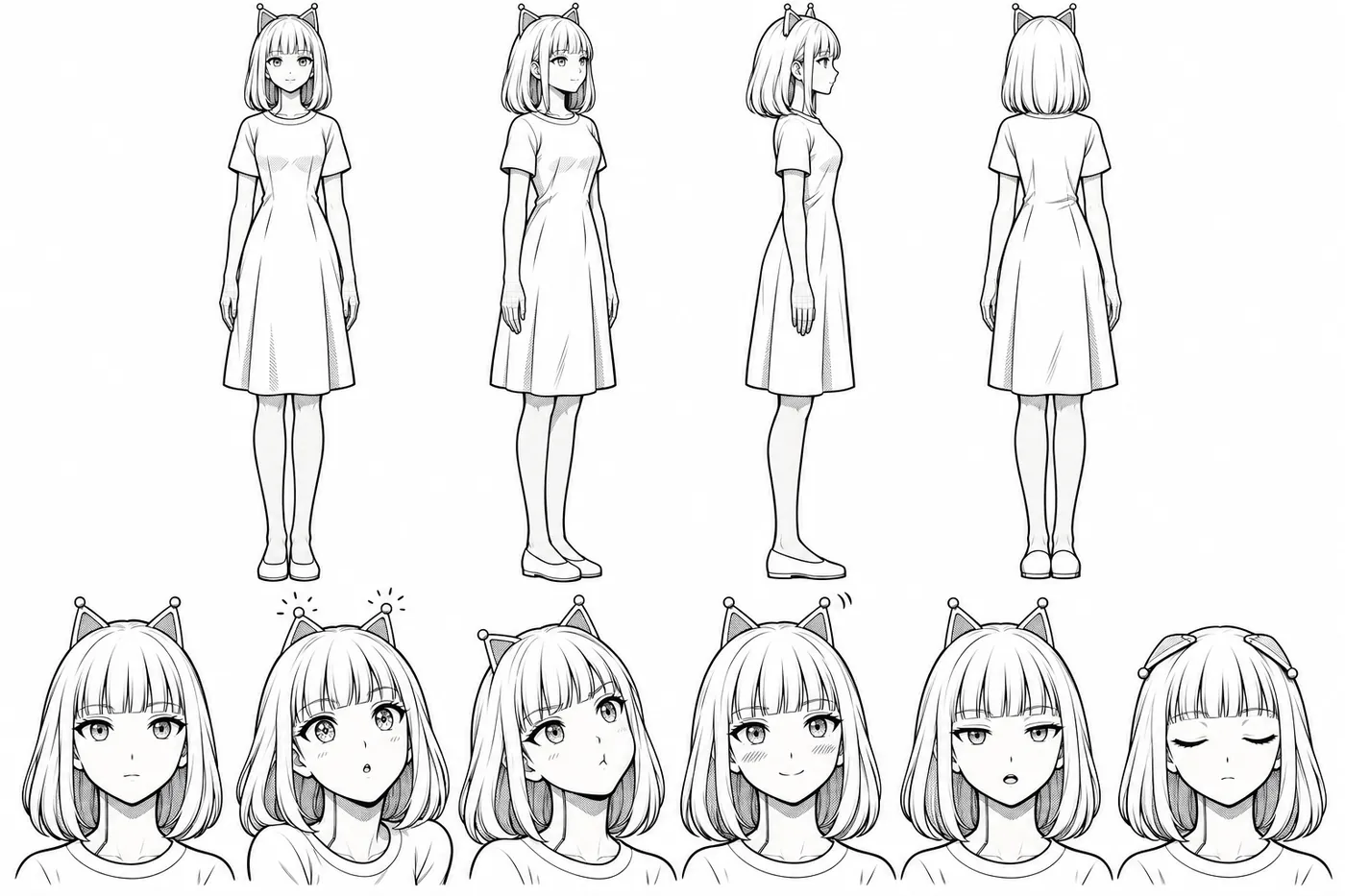
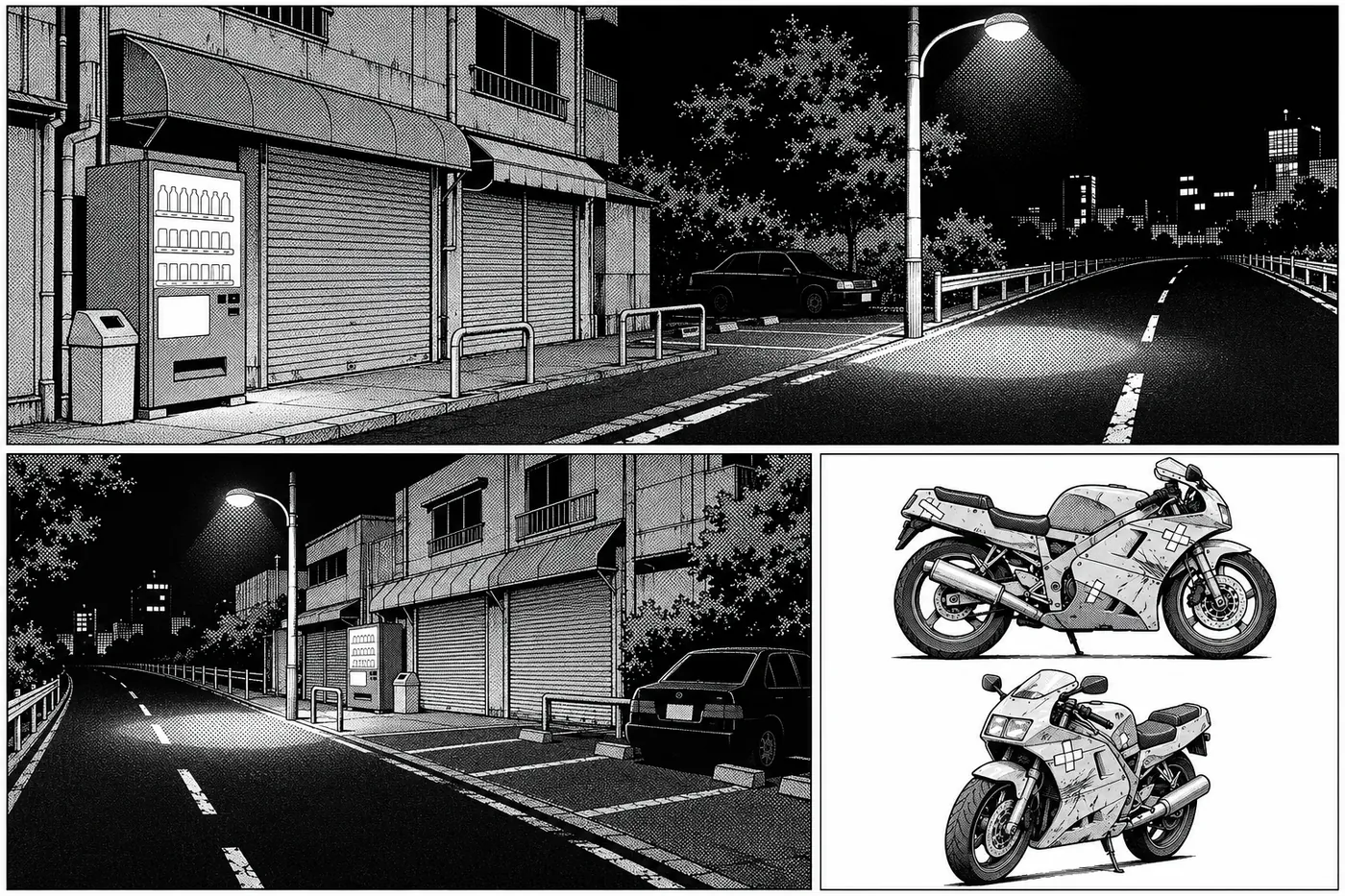
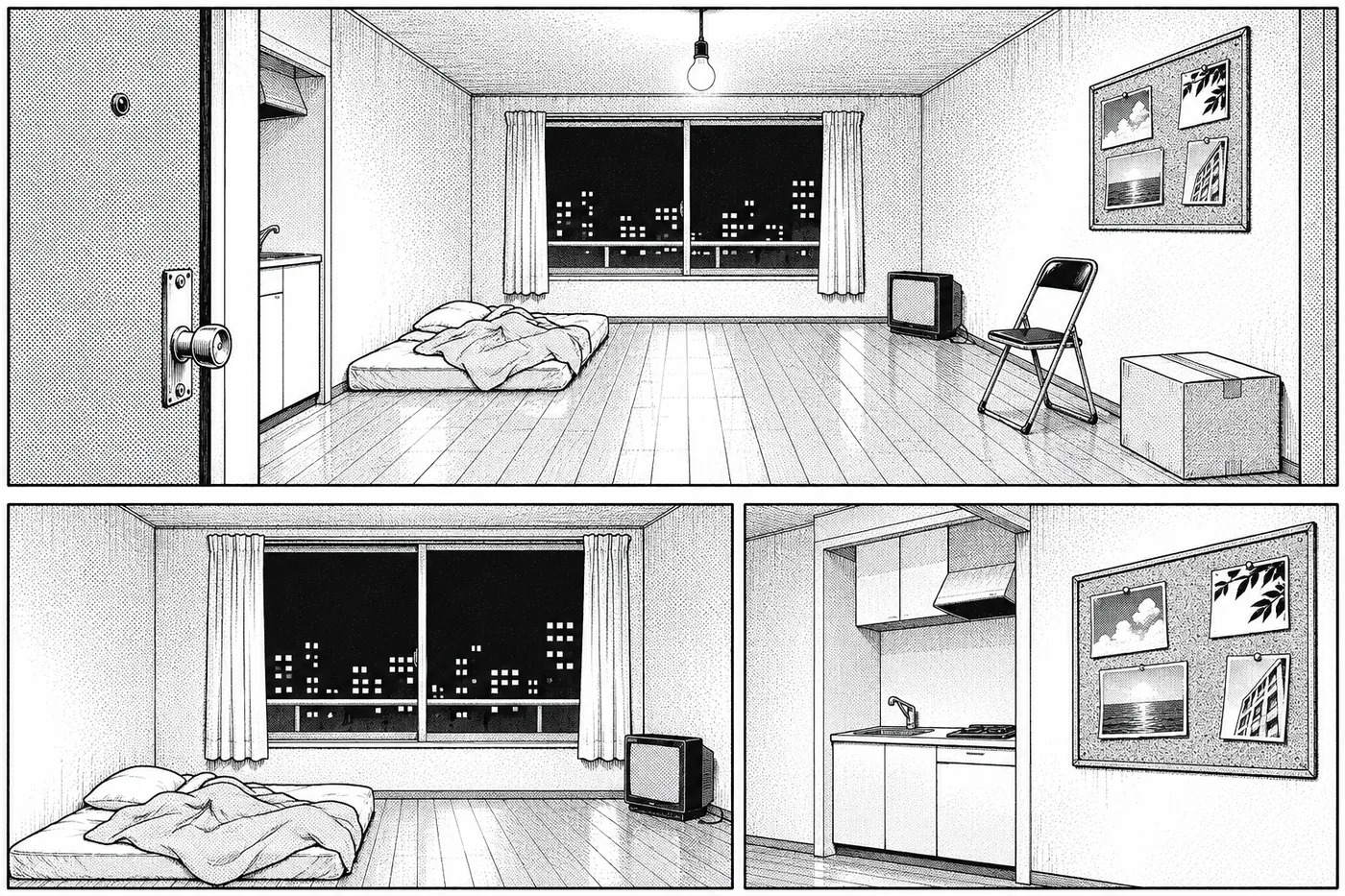
Every page gets the sheets for whoever and wherever is on it. That's how 19 pages keep the same faces. A sheet needs a front, side and back view, plus six expressions. On Seven's sheet, the cat-ear antennae change with each mood too, and every later page follows it.
Prompts
Art style: tell it what a human leaves out
Ask for "detailed and polished" and you get an illustration, wood grain on the door and all. No manga artist draws like that. This paragraph goes at the top of every image prompt:
Black-and-white Japanese manga page from a weekly shonen magazine, clean modern style. It must look DRAWN BY A HUMAN MANGA ARTIST BY HAND, not rendered: no photographic detail, no gray gradients, no airbrush or soft digital shading, no 3D-render look. Pure black ink on white paper only; shading ONLY with flat mechanical dot screentone, solid black fills and a little hatching. Confident, slightly uneven G-pen lines: thick outer contours, thin interior lines. Simple, readable faces with expressive eyes. Backgrounds simplified the way a real manga artist draws them on a weekly deadline: ruler-drawn perspective lines, objects reduced to basic shapes, close-ups with no background or just screentone, speed lines and effect lines where there is motion.
Model sheet
[the art style paragraph above]

Character model sheet. One character only: [describe the character the way you'd brief an artist: age, height and build, the most recognizable thing about the face, hair, the one outfit they wear, what they carry]

Layout: top row is a full-body turnaround of the SAME character at the same height and scale — front view, three-quarter view, side view, back view, relaxed neutral pose. Bottom row: six head-and-shoulders close-ups of the same face with these expressions: [six expressions]. Keep every feature identical across all views. Clean white background. Absolutely no text, no labels, no letters, no numbers, no arrows anywhere on the sheet.
If the first version comes out too young or in the wrong style, don't just rewrite the text and reroll: upload it as a reference and say "keep everything else, change only these things."
A full page
Every page prompt is built from parts: the art style, the sheets for whoever and wherever is on the page (uploaded as references), the panel layout, what goes in each panel, and one last rule: leave the balloons empty. The words go in afterwards with code, so one set of art gives you English and Chinese.
Page [n] of [total] of an original manga, chapter 1.
[the art style paragraph above] Reading order is LEFT TO RIGHT, TOP TO BOTTOM.

REFERENCES — Image 1: model sheet of [character A]; Image 2: model sheet of [character B]; Image 3: location sheet of [place]. Draw every character exactly as on their model sheet (same face, hair, build, clothes and props) and keep each location consistent with its sheet. Ignore the sheet layouts themselves; draw a normal manga page.

CHARACTERS: [one line per character, repeating what makes them recognizable]

LAYOUT: [how many panels, how they're arranged, which one is biggest]

PANELS:
Panel 1 ([size]; [shot and camera]): [what's in this panel] In this panel, in reading order: one empty medium speech balloon for [who].
Panel 2 (...): [...] No balloons in this panel.

TEXT RULE: every speech balloon is an EMPTY white balloon with a black outline and a tail pointing at the speaker; every screen shows only EMPTY blank text boxes. Leave all of them completely blank. Absolutely no letters, words, numbers, sound-effect lettering, logos or writing of any kind anywhere on the page.
Mia's tips
- Don't ask for a story in one sentence. Have it write down the first ten ideas it thinks of, cross them all out, and keep going. Just don't ban the genres people love while you're at it, or the ideas get darker and more convoluted.
- I used Claude Opus 4.6 for the script and storyboard; people who do AI roleplay swear by its writing. The art is the image generation built into Codex, the same GPT Image 2 behind ChatGPT's images, three pages at a time, a few minutes a page.
- Don't let it write on screens either (phones, meters, system UIs). Have it draw empty boxes and letter them later along with the balloons.
- Check every page yourself: the wrong shirt, something showing up too early, a shot drifting past all-ages. It won't tell you.